


Both electric vehicles and plug-in hybrids require an EV charger to keep the battery charged, just like any rechargeable device or electronic product. It's an integral part of the electric vehicle industry and usually goes hand in hand with the development of electric vehicles. It enables drivers to power their vehicles and travel long distances without relying on fossil fuels. EV charging infrastructure, consisting of various types of charging stations, is critical to supporting the widespread adoption of electric vehicles and enabling EV owners to charge at home, at work, and in public places.
Advantages of Electric Vehicle Charger
Provide convenience and flexibility
EV Chargers provide convenient charging solutions, so that car owners do not need to frequently look for gas stations, and a wider distribution network of charging piles increases the flexibility of charging options.
Reduce environmental pollution
EVs replace traditional fuel vehicles and reduce exhaust emissions. EV charger uses renewable energy for charging, reducing the carbon footprint.
Lower energy costs
Smart electric vehicle charging piles can manage to charge plans to take advantage of low-peak electricity prices and can use charging pile monitoring functions to understand charging consumption and costs in real-time.
Promote sustainable development
The installation and development of electric vehicle charging piles support the construction of a sustainable transportation system, and the expansion of the distribution network of EV chargers can provide infrastructure for the popularization and development of electric vehicles in the future.

Why Choose Us
Our factory
To provide better services, ASC has set up a factory named Hangzhou Mind Technology Co., Ltd. All the equipment and facilities have been arranged in accordance with ICTl, BSCL and ISO9001 standards Professional equipment, such as injection molding machines, ultrasonic welding machines, foaming machines, can basically meet customers' various needs and requirements including OEM and ODM orders.
Our product
Our main products are PVC Decking, PVC Cladding Panel, PVC Fence, Balusters aswell as many other PVC products like Whelping Box, Flower Pot, Decoration Boards and so on. The unique PVC materials and our tough technics enable our products features of light, anti-UV,corrosion proof, water-proof, fire-proofand durable. Committed to producing the high end products and meet markets' requirements, ASC's products can meet ISO 9227:2017,ASTM and ICC-ES standards.
Production equipment
Injection moulding machines, ultrasonic welding machines, foam machines. All the equipment and facilities are arranged according to ICTl, BSCL and ISO9001 standards.
Our service
Before mass production the design team examine every details of the sample to make sureit meets customers requirement and design team together with marketing department provides material and color references after analyzing general trends.

Slow Charger (Level 1 EV Chargers)
There are in general, the most commonly found EV chargers in households where the EV-owner can recharge their vehicle in the comfort and convenience of their home and routine. This EV charger for home takes a comparatively longer time to completely charge the electric vehicle.
Fast Charger (Level 2 EV Chargers)
The fast charger is mostly found in public places such as supermarkets, public parks, shops, leisure centers, and else. Almost every EV and plug-in hybrid electric vehicle (PHEV) can be charged using a type-2 charger.
Rapid Charger (Level 3 EV Chargers)
The DC charger for electric vehicles charges the vehicle super fast and the reason is that it is supported by direct current. The DC charger converts the AC current incoming into direct current at the charging station. It generally charges an electric car upto 80% within 20 minutes, and can fully charge the vehicle in an hour’s time.
How Does Electric Vehicle Charger Work?
EV charging works by transferring electricity from a power source to the battery of an electric vehicle. The process involves several key components and steps:
Plug-in the vehicle
Connect the charging cable to the electric vehicle's charging port and the charging station.
Communication and authentication
The vehicle and charging station exchange information to ensure compatibility and authorization for charging.
Power delivery
Once authenticated, the charging station supplies the appropriate voltage and current to charge the vehicle's battery. The charging station converts the alternating current (AC) from the power grid to the direct current (DC) needed by the vehicle's battery.
Monitoring and safety features
Charging systems monitor the charging process, ensuring safety and preventing overcharging or overheating. They also have safety features like ground fault protection.
Charging completion
When the battery reaches the desired state of charge or the charging session ends, the charging process stops. Some charging stations may notify the user or vehicle when the charging is complete.
EV charging can occur at various locations, including homes, workplaces, and public charging stations. The charging speed and time required depend on factors such as the power level of the charging station, the vehicle's charging capabilities, and the battery capacity. Understanding how EV charging works allows electric vehicle owners to effectively charge their vehicles and optimize their charging experience based on their needs and available charging infrastructure.
Electric car battery
The bigger the battery, the longer it will take to charge. Simple, right? An EV's battery capacity is measured in kilowatt-hours (kWh), similar to a liter or a gallon but for electricity, with each kWh equal to the amount of energy you would use to run a 1,000-watt appliance for an hour. The vast majority of electric passenger vehicle batteries today can hold somewhere between 25 and 100 kWh when fully charged, with the average EV having a 69 kWh battery capacity.
Charging capacity of the vehicle
The maximum power an EV can accept differs from vehicle to vehicle and can even vary depending on the model of the car. Measured in kilowatts (kW), the charging capacity is shown for both AC charging and DC charging, and each is a large factor in determining how long it takes to charge. For instance, if two vehicles with similar-sized batteries are charging side by side at a high-power DC charging station, but one can only accept 50 kW of DC power and the other 250 kW, then the latter will charge much faster than the former.
Charging output of the charging station
The different output of the charging station plays a large factor in how long it takes to charge an EV. The higher the kW output on a charging station, the faster it can charge (presuming that your vehicle can handle the higher power output).
State of charge
It might sound obvious, but how much charge you have in your vehicle when you begin your charging session also plays a part in how long it takes to charge. The same as when you’re putting gas in a traditional vehicle, depending on whether you have half a tank or are almost empty, how long it takes to charge will differ.
The DC charging curve
With AC charging, the power flow from the charger to an EV is mostly flat, meaning that it will charge at roughly the same speed from 0-100 percent full. In contrast, with DC charging, the EV’s battery initially accepts a very high flow of power, then quickly peaks and starts to decrease the power it takes in as it begins to fill up.
Why You Need to Know the Main Components of Electric Vehicle Charger
Understanding the main components of EV chargers is vital for several reasons. Firstly, it allows EV owners to choose the right type of charger for their vehicle and charging needs. Moreover, they can confidently make related decisions regarding the most reliable electric vehicle supply equipment manufacturer. It also enables EV owners to troubleshoot charging issues and perform essential charger maintenance.
Power Supply
The power supply is one of the main components of EV chargers. It converts the grid’s AC or DC electrical power into the appropriate voltage and current to charge the EV’s battery. The power supply component typically consists of a transformer, rectifier, and control circuitry.
01
Connector
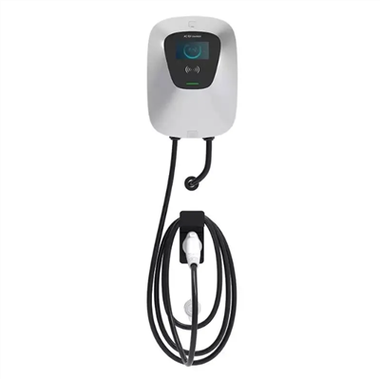
The EV charging connectors (accessories) consist of the plug, which goes into the electric vehicle’s inlet, and the socket. The plug and socket have pins that match and connect to form an electrical circuit. The pins can handle a range of high currents and voltages without overheating or causing electrical arcing.
02
Charging Cable
The charging cable is the connection between the charging station and the EV. It carries the electric current from the charging station to the EV’s battery. The quality and type of charging cable used can affect the speed and efficiency of the charging process.
03
Control Board
The control board is the brain of the charging station. It manages the charging process and ensures the EV battery is safe and efficient. A well-designed control board is essential for the reliability and safety of the charging station. It typically consists of a microcontroller, voltage and current sensors, relays, and other components.
04
User Interface
The user interface is part of the charging station that the user interacts with. It typically includes a screen, buttons, or other input devices that allow the user to input information and control the charging process. The charging station can integrate or connect the user interface to a separate device.
05
What Should I Look for in an Electric Vehicle Charger




Safety first
As long as it’s UL-certified and you use it as directed, the charger is unlikely to cause a fire. All the models mentioned above are UL-listed, but some lower-cost models sold through Amazon are not.
Outlet vs. hardwire
Some EV chargers use a hardwired electrical connection – no plug, no outlet. Others plug into an outlet. For L2 chargers, that's typically a 4-prong, 14-50 outlet, like many electric stoves or clothes dryers. A lot of models come in both types. It's a cleaner-looking installation with shorter cable runs, no visible plug, and no outlet. You can avoid installing a bulky outdoor-rated outlet because the hidden electrical connection already makes the charger more weatherproof. Hardwired connections can charge faster than plug-in chargers (if your car and electrical wiring can support it).
Plug-in
If you already have an outlet, you don't need to hire an electrician. Even if you need a new outlet, or your outlet wears out, you won't need an electrician to swap out chargers in the future, which saves you money in the long run. Certain models are weatherproof (for outdoor use), though you'll need to plug into an outdoor-rated outlet.
Cord length
We've all pulled up to the gas pump on the wrong side, and we'll all end up parking our EVs too far from the charger at least once. You probably won't regret having the extra length of a longer cable. According to the National Electrical Code, the maximum safe cable length is 25 feet. Most Level 2 chargers are at least 20 feet long. Aim for something in that range. Technically speaking, longer cords could be less energy efficient than shorter ones.
Scheduling
EVs draw a lot of electricity. If you can find ways to pay less for electricity, you can save a lot of money over time. Solar power is an excellent way to save.
Steps You Can Take to Look After Your Electric Vehicle Charger
Inspect the charger frequently
Like any other plug-in device, most drivers walk away straight after plugging in their EV. However, it’s worth getting into the habit of looking at the charger and making a note of anything that might look out of place. This could include physical damage to the casing, loose connections, or a broken socket cap.
Keep the charger clean
Lots of drivers put great care into keeping their car looking spotless. Frequently cleaning your charger not only makes it look nicer, but it can also ensure no dirt or debris comes into contact with the electronics inside which makes it last longer.
Carefully wipe off any dirt or debris from the charger’s shell. You can clean the charging port by gently using a Q-tip around the charging contacts. However, make sure not to use any chemicals when cleaning the charging port, as this can damage the electronics.
Don’t forget about the software
Home chargers are like any smart device, in that they often receive software updates. These typically include security updates, resolve glitches, or new features.
Most chargers and apps will update automatically, but it’s worth checking occasionally for EV charger software updates to make sure it’s on the latest recommended version. Otherwise, your charger could be less efficient, or less intelligent, than it should be.
Store it neatly and safely
Unlike phone cables, it can be costly to repair or replace a charging cable. After every charge, make sure to give them a good clean and store them neatly. It’s also worth inspecting them for any damage or exposed wires every time you use it. If your cable is damaged, you should get it repaired or replaced immediately.
Keep your charging cable secure
The last thing anyone wants is for their cable to get stolen. If you’re worried about your cable being stolen, you might want to invest in a charger with a tethered cable. This is where the cable is permanently attached to the charger, so it’s difficult to steal. Otherwise, if necessary, store your cable in a garage or generally indoors.
Our factory
Asia (Hangzhou) Sourcing & Communications, covers 10,800 square meters area, is established in 2004, located in Hangzhou, which is easy access to Ningbo and Shanghai port. ASC is specialized in designing, producing.exporting many building products, such as Outdoor Flooring, Balusters, Fence, Railings, Deck LED Lights and so on. It has a responsible service team to provide customers with the most professional and whole-hearted service. ASC has been producing environmentally friendly composite building products with own patent and brands for decades. ASC has an excellent R&D Dept. to seek, explore and develop high-tech and practical products.The innovative design, along with the high quality materials and manufacturing processes enable ASC to offer premier solutions to the problems faced by customers today. Up till now, ASC has gained a good reputation from customers and its products are in great demand in American and European markets.


Certificate

FAQ
As one of the leading electric vehicle charger manufacturers and suppliers in China, we warmly welcome you to wholesale cheap electric vehicle charger from our factory. All our products are with high quality and competitive price. Contact us for more details.